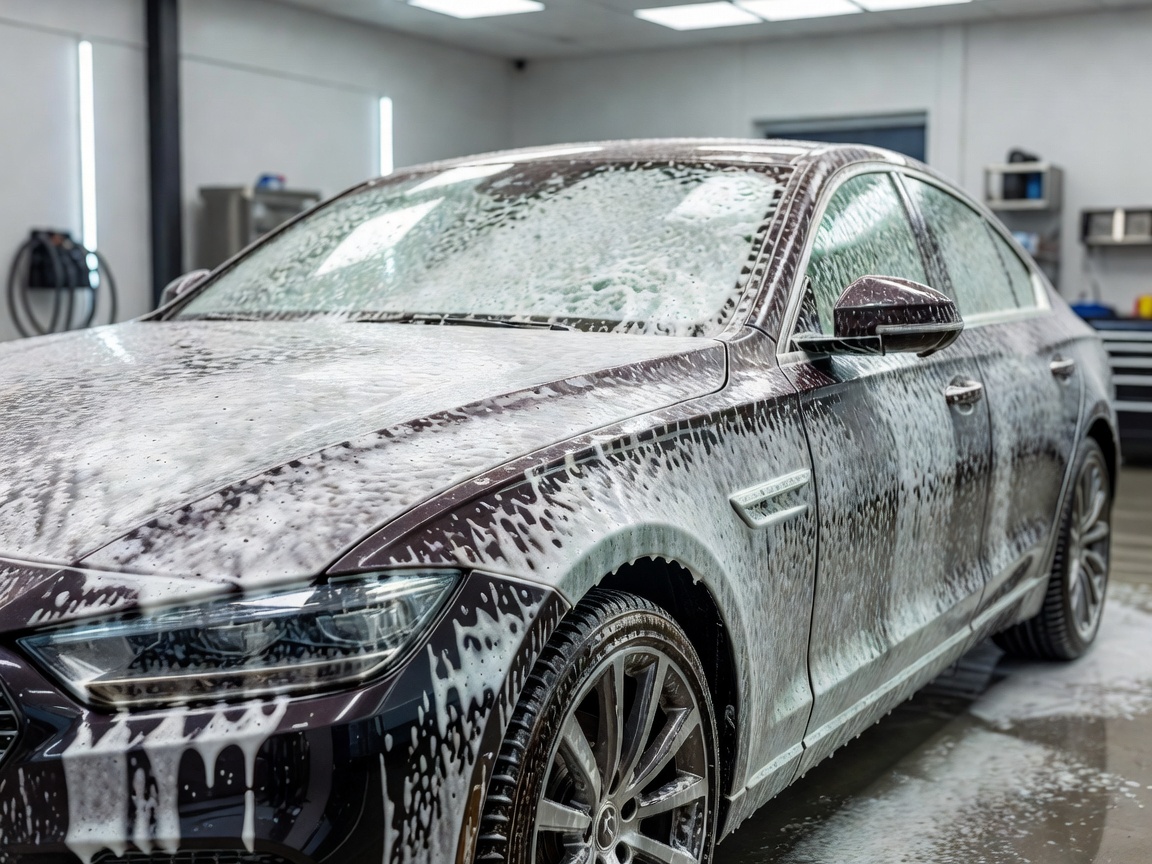
For standard commuter vehicles, we recommend washing every 2 to 3 weeks. However, during winter periods with heavily salted roads, a contact-free rinse every week is highly beneficial to prevent salt buildup in arches.
Road salt acts as an electrolyte that dramatically accelerates rust. If your car has pre-existing micro-chips that expose bare metal, salt exposure can cause structural bubbling under paintwork if not rinsed regularly.
No. Machine polishing gently abrades and refines the surrounding clear coat to blend out shallow scratches. If a stone chip has cut through the clear coat to expose metal or primer, it requires physical paint touch-up or respraying.
No, modern coatings are sacrificial barriers that wear down over time. Their actual lifespan depends heavily on your driving patterns, parking conditions, weather exposure, and proper hand-wash maintenance.
Clean leather should have a matte, satin finish. We avoid shiny, silicone-filled dressings. Instead, we use pH-neutral cleaners to strip away body oils and dust, followed by a breathable cream conditioner that leaves surfaces non-sticky.
No. We prioritize clear coat preservation over aggressive, deep correction. Chasing perfect correction can leave clear coats too thin, increasing the risk of future UV failure. We focus on safe, dramatic gloss enhancement.
Woven carpets can trap barbed pet hairs deeply. While we can physically extract most of this pet hair using specialized brushes and vacuum tools, we cannot guarantee complete removal from heavily affected fabrics.
Older vehicles with single-stage paints or classic clear coats require extreme caution. We perform multiple digital depth readings on every panel to ensure polishing can proceed without striking through delicate edges.
No. Because every vehicle varies significantly in its initial paint condition, soil levels, size, and material age, we provide customized care estimates. Final prices are confirmed after a physical, on-site inspection.
Fresh wax creates strong water-beading performance that helps shield your paint. However, driving through heavy rain can pick up oily traffic film from the road, which will eventually degrade the wax coating over time.
This website is entirely informational and designed for advice inquiries. We do not process online bookings, storage of card details, or payment transactions on this site.
Decontamination removes invisible, bonded contaminants like metal fallout and tar spots. It is crucial before polishing or sealing paintwork, as applying products over contaminated paint traps grit and ruins the finish.
We work closely with local businesses to design scheduled valeting routines. You can inquire through our contact form with details on your fleet size and vehicle models to receive a custom proposal.
No. Cleaning and matte dressings can make plastic scratches look less prominent, but physical cracks or deep gouges in dashboards cannot be repaired with detailing. They require replacement parts or cosmetic repair.
Still have questions?
We are always ready to discuss paint concerns, custom schedules, and realistic care treatments.